
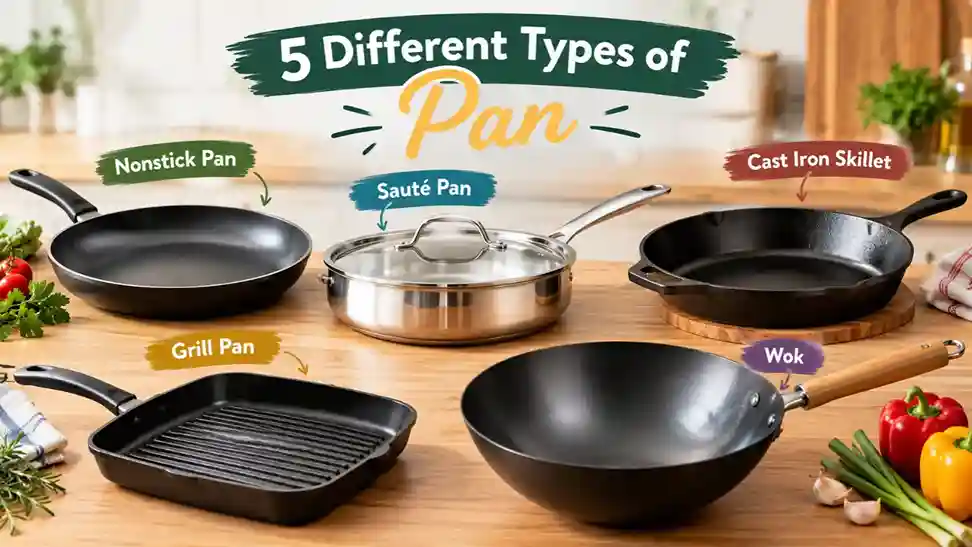
Choosing the perfect cookware enhances your daily cooking experience, making it easier and hassle-free. Now, not all pans are created equal. There are various types of pan — this will help you determine the kind of cookware for frying, sautéing, grilling, searing to stir-frying and other cooking activities.
This guide breaks down the best Amazon listings for 5 Different Types of Pans nonstick frying pans, sauté pans, grill pans, cast iron skillets and carbon steel woks. There are different designs, cooking benefits and purposes for each type so if you want to pick the most suitable one with respect to your meals you will prepare along with which methods of cooking do you use often enough..
Quick Comparison of the Different Types of Pans
| Pans | Type | Size | Main Cooking Uses | Cooktop Compatibility | Key Feature |
| Tramontina Professional | Nonstick Frying Pan | 12-inch | Frying, omelets, stir-fries, searing | Gas, electric, ceramic | Reinforced nonstick coating |
| Blue Diamond | Ceramic Sauté Pan | 5 qt | Sautéing, one-pan meals, simmering | Versatile stovetop use | PFAS-free ceramic coating |
| SENSARTE | Nonstick Grill Pan | 9.5-inch | Grilling, searing, vegetables, chicken | Gas, electric, induction, glass/ceramic | Raised grill ridges |
| Utopia Kitchen | Cast Iron Skillet | 12-inch | Searing, frying, baking, grilling | Stovetop, grill, camping | Excellent heat retention |
| Teewe | Carbon Steel Wok | 13-inch | Stir-frying, frying, braising, steaming | Induction, gas, electric | Large flat-bottom design |
Understanding the 5 Different Types of Pans
The term pan refers to a wide variety of cookware. Many pans may look alike, but shape, size, materials, coatings and cooking surfaces can make them appropriate for jobs that are worlds apart.
It usually consists of a wide, flat cooking surface with relatively low sides. Perfect for eggs, veggies, meat, pancakes and everyday frying. Because of its sides, a sauté pan is generally more versatile in terms of when you need the extra height for ingredients or such like.
A grill pan has ridges, which allow excess fat and juices to collect underneath the food while still marking it. Cast iron loses heat slowly and maintains temperature well, carbon steel is lighter and has a very fast temperature response.
It is important to know these differences, since they are not suitable for every situation with each pan type.
Tramontina Professional 12-Inch Nonstick Large Frying Pans
Tramontina Professional 12-inch Nonstick Frying Pan – Run-of-the-mill, family cooking The large leading surface is perfect for omelets, stir-fries, vegetables and even seared meat. Reinforced with a nonstick finish for effortless food release and cleanup, heavy-gauge aluminum ensures even heating. It works for those with gas, electric and ceramic glass cooktops, is oven-safe to 400°F and dishwasher-safe. It is almost not compatible with induction cooktop.
Pros
- Spacious 12-inch cooking surface
- Reinforced nonstick coating
- Heavy-gauge aluminum construction
- Designed for even heating
- Oven-safe up to 400°F
- Dishwasher-safe
- Suitable for gas, electric, and ceramic glass cooktops
- Lifetime warranty
Cons
- Not suitable for induction cooktops
- The large size may take more storage space
For shoppers looking for one of the 5 different types of pans that can handle everyday family cooking, this frying pan offers a combination of capacity, nonstick convenience, and versatility.

Blue Diamond 5QT PFAS-Free Ceramic Nonstick Sauté Pans
The Blue Diamond 5QT Ceramic Nonstick Sauté Pan is a suitable option for larger meals and recipes that involves sauce or liquid. Diamond reinforced ceramic nonstick coating allows food to release effortlessly, and a tempered glass lid helps seal in heat & moisture. The base was extremely thick and forged to prevent warping, and the pan itself is oven/broiler safe up to 600F (621C) as well as dishwasher-safe for easy cleaning.
Pros
- Large 5-quart capacity
- Ceramic nonstick cooking surface
- PFAS-, PFOA-, lead-, and cadmium-free coating
- Includes tempered glass lid
- Heavy-duty forged base
- Oven and broiler safe up to 600°F
- Dishwasher-safe
- Useful for larger meals
Cons
- Deeper design may not replace a traditional frying pan for every recipe
- Larger capacity can require additional storage space
Among the 5 different types of pans, a sauté pan is especially useful when you want the surface area of a skillet but also need taller sides for ingredients, sauces, and larger portions.

SENSARTE Nonstick Grill Pans for Stove Tops
The SENSARTE 9.5-inch Nonstick Grill Pan is intended for cooking grilled meals indoors or outdoors. The elevating ridges not only create pretty grill marks, but also wick away excess fat into the basin below. Nonstick ILAG cooking coating — PFOA- and PFOS-free makes cooking simple, as well as easy clean-up The die-cast aluminum has been designed for durability, and the Bakelite handle has a cool touch to add extra convenience; on the other hand, this pan can be used on gas, electric, induction cooktops & glass or ceramic doors.
Pros
- Raised ridges for grill marks
- Nonstick cooking surface
- Suitable for gas and electric cooktops
- Compatible with induction
- Works on glass and ceramic cooktops
- Pour spouts on both sides
- Useful for meat and vegetables
- Suitable for indoor or outdoor grilling
Cons
- Smaller than the 12-inch frying and cast iron options
- Raised ridges are not ideal for every type of recipe
For anyone comparing the different types of pans a grill pan is worth considering when searing and grilling are important parts of your cooking routine.

Utopia Kitchen 12-Inch Pre-Seasoned Cast Iron Skillet
Professional Grade Cast Iron Skillet Pan Utopia Kitchen 12-Inch – Stw Stone Cookware Fits For all Types of Cooking you Can Searing Frying Baking Grilling Outdoor… Featuring a cast iron construction that retains heat very well, it presents also a 12-inch surface, so you can take care of family meals. Pre-seasoned with vegetable oil It works on the stove, grill, or when you are camping.
Pros
- Excellent heat retention
- 12-inch cooking surface
- Pre-seasoned
- Suitable for searing and frying
- Can be used for baking
- Useful on grills and during camping
- Suitable for family meals
- Durable cast iron construction
Cons
- Cast iron is heavier than aluminum cookware
- Requires appropriate seasoning and care
- May not be the first choice for shoppers wanting lightweight cookware
When considering the different types of pans, cast iron stands out for shoppers who value heat retention, traditional cooking performance, and versatility.

Teewe 13-Inch Carbon Steel Wok
Among the different types of pan, this Teewe 13-Inch Carbon Steel Wok is a versatile and spacious option that can be used for stir-frying, steaming, braising deep-frying or pan-frying. Constructed from durable and fast-heating carbon steel with a flat bottom for use on induction, gas or electric stoves, its pre-seasoned surface will keep you cooking. Set comes with lid, spatula and dish brush. No empty heating with temperatures exceeding 572°F.
Pros
- Large 13-inch capacity
- Suitable for family portions
- Carbon steel construction
- Flat bottom
- Compatible with induction, gas, and electric stoves
- Useful for stir-frying and frying
- Includes lid and accessories
- Lightweight compared with many cast iron pans
Cons
- Requires careful temperature management
- Should not be heated empty
- Carbon steel requires appropriate care
- Not ideal if you only need a basic frying pan
For cooks who regularly prepare Asian-inspired meals, stir-fries, fried rice, vegetables, and other high-heat dishes, a wok can be one of the most useful different types of pan to add to a kitchen.

Also read Glass Whistling Tea Kettles
What to Look for When Buying a Pans
When comparing the different types of pans, consider several factors before making a purchase.
Material
Pan material affects heat distribution, heat retention, weight, and maintenance. Aluminum is generally valued for quick heating, cast iron for heat retention, and carbon steel for responsiveness and durability.
Cooking Surface
Nonstick surfaces can be convenient for eggs, delicate foods, and low-oil cooking. Cast iron and carbon steel offer different cooking characteristics and require appropriate maintenance.
Size
Think about the number of people you normally cook for. A 9.5-inch grill pan may work well for smaller cooking tasks, while 12- and 13-inch pans provide more room for family meals.
Cooktop Compatibility
Always check whether a pan works with your stove. Some cookware is suitable for induction, while others are specifically designed for gas, electric, or ceramic cooktops.
Oven Safety
If you want to move cookware from the stovetop into the oven, check the manufacturer’s maximum temperature and any handle requirements.
Cleaning
Dishwasher-safe cookware can save time, while traditional cast iron and carbon steel may require more specific cleaning and seasoning practices.
Are Different Types of Pan Necessary for a Kitchen?
You do not necessarily need every type of cookware available. However, having two or three complementary pans can make cooking more convenient.
A frying pan can handle everyday meals, a deeper sauté pan can provide additional capacity, and a grill pan can help create grilled textures. A cast iron skillet can provide excellent heat retention, while a wok can make stir-frying easier.
The most useful different types of pan for your kitchen will depend on your cooking habits, available storage, preferred cooking methods, and stove type.
Frequently Asked Questions
What are the different types of pans?
The different types of pan include frying pans, sauté pans, grill pans, cast iron skillets, woks, saucepans, crepe pans, and specialty cookware. Each design has different characteristics for particular cooking methods.
What is the different type of frying pans and a sauté pan?
A frying pan generally has lower sides and a broad cooking surface, making it useful for frying, searing, eggs, and similar foods. A sauté pan usually has taller, straighter sides and can hold more ingredients and liquids.
Which type of pan is best for everyday cooking?
A nonstick frying pan is often convenient for everyday cooking because it can be used for eggs, vegetables, meat, omelets, and many quick meals. The best choice ultimately depends on your cooking habits.
What type of pan is best for searing meat?
Cast iron skillets are commonly used for searing because they retain heat effectively. A grill pan can also be useful when you want raised grill marks on meat.
Are ceramic pans better than traditional nonstick pans?
Ceramic and traditional nonstick cookware have different characteristics. Ceramic nonstick surfaces can offer easy food release and convenient cleanup, while traditional nonstick cookware is often selected for its low-stick performance and everyday versatility.
What is a cast iron skillet good for?
A cast iron skillet can be used for searing, frying, baking, roasting-style cooking, grilling, and outdoor cooking. Its strong heat retention makes it useful for recipes requiring steady heat.
What is a carbon steel wok used for?
A carbon steel wok is particularly useful for stir-frying, but it can also be used for pan-frying, deep-frying, braising, and steaming. Its deep shape provides room for tossing and combining ingredients.
Can different types of pans be used on induction cooktops?
Some pans are induction-compatible while others are not. Always check the product specifications before buying. For example, the SENSARTE grill pan and Teewe carbon steel wok supplied for this guide are described as compatible with induction cooktops, while the Tramontina frying pan is specifically listed as not induction-compatible.
How do I choose the right pan size?
Consider how many people you usually cook for and what foods you prepare. Smaller pans are useful for individual portions, while 12- and 13-inch cookware can provide more space for family meals.
What should I consider when buying cookware?
Consider material, size, cooking surface, heat distribution, cooktop compatibility, oven safety, cleaning requirements, handle design, and the types of recipes you prepare most often.
Final Thoughts
Each of the different types of fans has its purpose but know how they can vary makes selecting pans based on what you actually will be using them for—and not just picking whichever is biggest or trending—much easier.
Tramontina Professional 12-Inch Nonstick Frying Pan: This is a pan about everyday frying and family meals. Blue Diamond’s 5QT Sauté Pan is deeper and able to hold larger recipes. It is the SENSARTE Grill Pan that aims at cooking in a grill style with raised grill marks. Teewe Carbon Steel Wok — Especially suitable for stir-fry and a variety of other Asian cooking stylesUtopia Kitchen Cast Iron Skillet – With remarkable heat retention, use this skillet inside or outside
Do your research before shelling out to figure out your material, size, cooking surface, heat requirements, cooktop compatibility and cleaning needs as well as what recipes you prep most frequently. When you understand how the various types of pan are intended to function, then cooking with cookware becomes far more straightforward.